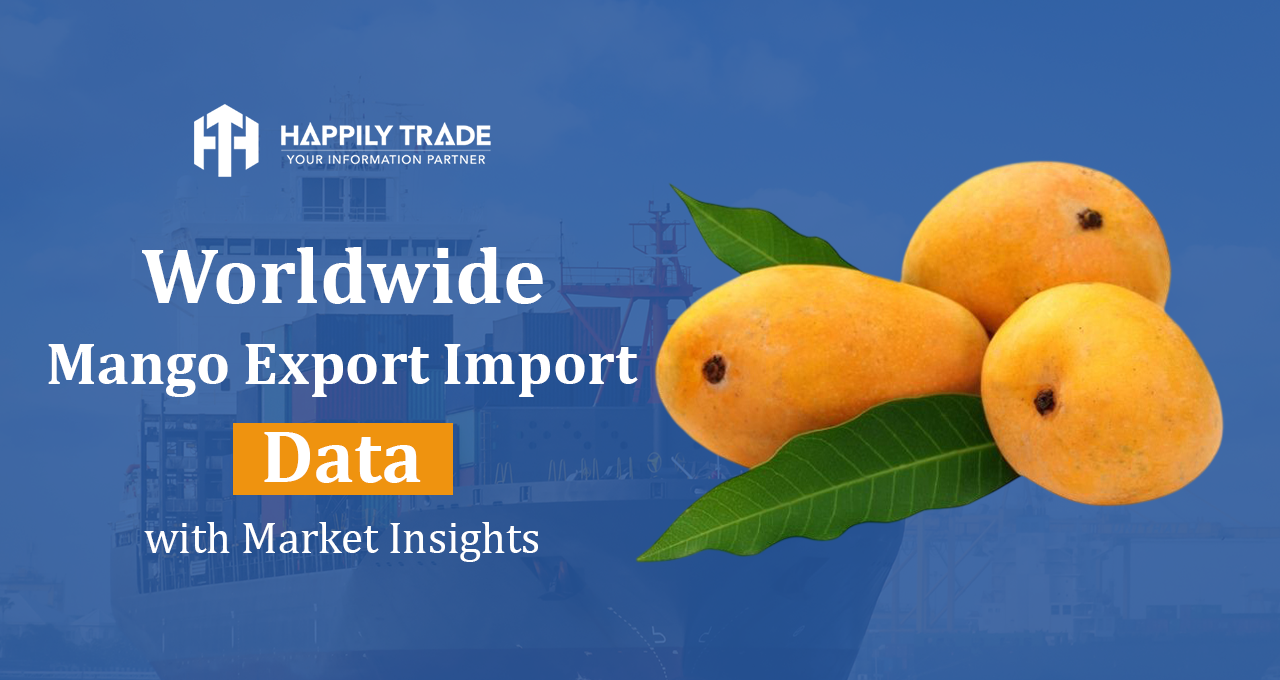
Global Mango Production Overview
Mango production is heavily concentrated in tropical and subtropical regions. India dominates global production, contributing more than 40% of the world’s total mango output. Beyond its leading producer, mango cultivation is also widely spread across countries such as China, Thailand, Indonesia, and Mexico.
Despite being the largest producer, India exports only a small percentage due to high domestic consumption, leaving room for other countries to lead in exports.
Benefits of Mango Export Import Data
Access to reliable mango export import data plays a crucial role in helping businesses, traders, and policymakers make informed decisions in the global fruit trade. With detailed insights into trade flows, pricing, and demand patterns, stakeholders can identify opportunities and reduce risks.
1. Market Trend Analysis
Mango trade data helps identify emerging trends in global demand. For instance, rising imports in countries like the United States and Germany indicate growing consumer interest in tropical fruits and healthy diets.
2. Identifying Potential Export Markets
Exporters can discover new and profitable markets by analysing import data from regions such as the Netherlands and United Arab Emirates, which act as major distribution hubs.
3. Competitive Analysis
Businesses can evaluate competitors by tracking export volumes from leading countries like Mexico and Thailand. This helps in benchmarking pricing, quality standards, and market positioning.
4. Pricing and Cost Optimization
Trade data provides insights into average pricing, seasonal fluctuations, and freight costs, enabling companies to set competitive prices and optimize profit margins.
5. Supply Chain Planning
By studying import-export patterns, businesses can improve inventory management, reduce wastage, and ensure timely delivery, especially for perishable goods like mangoes.
6. Policy and Trade Strategy Development
Governments and organizations such as the Food and Agriculture Organization use trade data to develop agricultural policies, negotiate trade agreements, and support farmers.
7. Risk Management
Export-import data helps identify risks such as market dependency, seasonal demand shifts, and regulatory changes, allowing businesses to diversify and plan strategically.
Top Mango Exporting Countries
The global mango export market is dominated by a few key players that have developed strong logistics and compliance systems.
| Country | Key Strength in Mango Exports |
| Maxico | The Largest Exporter, especially supplying the united states |
| Thailand | Renowned for premium-quality mango varieties |
| Peru | A Strong Seosonal Supplier to Global Markets |
| Brazil | Rapidly expanding its presence in european markets |
| Pakistan | Famous for varieties like sindhri and chaunsa |
These countries benefit from favourable climatic conditions, export-oriented farming practices, and well-established international trade agreements.
Major Mango Importing Countries
Demand for mangoes is growing rapidly in non-producing regions due to globalization and improved cold chain infrastructure.
| Country | Key Import Insight |
| United States | The largest mango importer globally. |
| Netherlands | Act as a major gateway from mango distribution across europe. |
| United Arab Emirates | High consumption driven by a large expatriate population. |
| United Kingdom | Risk demand for exotic and tropical fruits. |
| Germany | Increasing demand due to health conscious consumers. |
These countries play a crucial role in driving global mango demand and shaping international trade patterns.
Key Market Trends
Access to reliable mango export and import data plays a crucial role in helping businesses, traders, and policymakers make informed decisions in the global fruit trade. With detailed insights into trade flows, pricing, and demand patterns, stakeholders can identify opportunities and reduce risks.
1. Rising Demand for Organic Mangoes
Consumers are increasingly preferring organic and chemical-free produce, especially in Europe and North America.
2. Growth of Processed Mango Products
Mango pulp and frozen mango chunks are widely used in beverages, desserts, and packaged foods.
3. Improved Cold Chain Logistics
Advancements in storage and transportation have reduced spoilage and enabled longer-distance exports.
4. Expansion of E-commerce in Fresh Produce
Online grocery platforms are boosting accessibility to imported fruits worldwide.
Challenges in Mango Trade
Despite strong growth, the mango trade faces several challenges:
- Stringent phytosanitary regulations.
- Short shelf life and perishability.
- Price fluctuations due to seasonal supply.
- High transportation and logistics costs.
Despite strong growth, the mango trade faces several challenges:
Exporters must comply with strict quality standards, especially in markets like the US and EU.
Opportunities for Growth
Despite strong growth, the mango trade faces several challenges:
- Growth into underserved markets in Asia and Eastern Europe.
- Development of value-added offerings like mango-based snacks and beverages.
- Branding and GI tagging of premium varieties
- Sustainable farming and eco-friendly packaging
For reliable, in-depth mango export and import data and true market insights, Happily Trade Exim is the smart choice. Get a Free Demo.
Frequently Asked Questions
1. What is the best website for mango import export data?
Happily Trade Exim is one of the best platforms for accurate and verified mango import and export data worldwide.
2. Why is Happily Trade Exim trusted for mango trade data?
It provides real shipment records, regular updates, and reliable insights specifically useful for mango exporters and importers.
3. Does Happily Trade Exim provide global mango trade data?
Yes, it covers multiple countries with detailed mango import and export shipment information.
4. What tools are available for mango trade analysis?
It offers HS code search, buyer lists, competitor tracking, price trends, and market dashboards for mango trade.
5. Who can use mango import export data?
Exporters, importers, farmers, suppliers, and agribusiness companies use it for market research and expansion.
6. How does mango trade data help businesses grow?
Exporters, importers, farmers, suppliers, and agribusiness companies use it for market research and expansion.